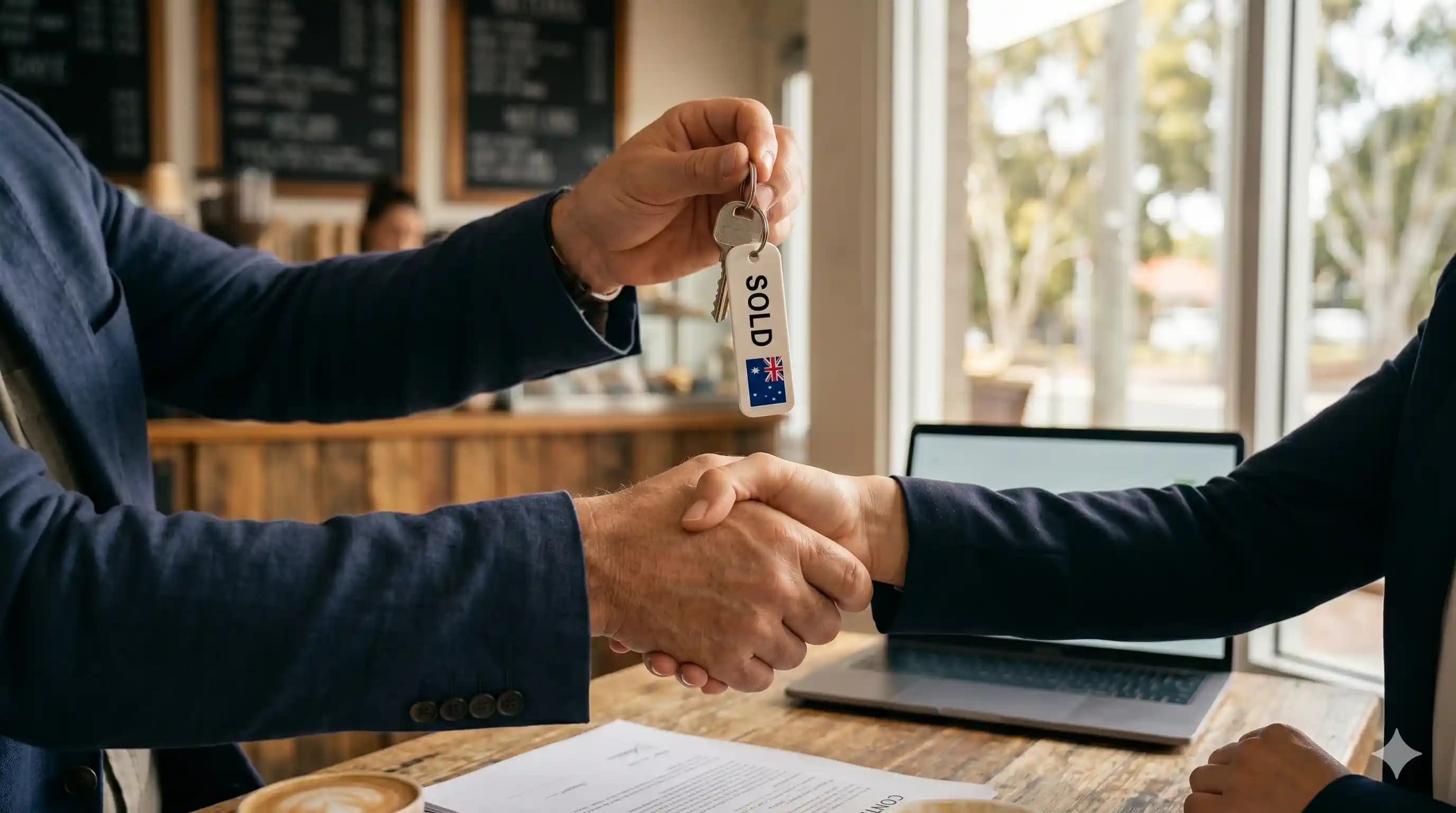
Selling your small business is one of the most significant financial events of your life. Whether you've spent five years or thirty building it, the moment you decide to exit deserves the right preparation, the right strategy, and an honest look at your options.
This guide is written specifically for Australian small business owners — not corporate M&A teams. If you've been searching for small business brokers, wondering whether to use a broker to sell my business, or simply figuring out where to start, this is your roadmap.
Understanding Your Options: Brokers vs. Marketplaces vs. DIY
|
Method |
Typical Cost |
Average Timeline |
Buyer Reach |
Best For |
|
Local small business broker |
8–12% commission |
9–18 months |
Broker's database only |
Complex businesses, $1M+ |
|
Online marketplace (Exity) |
Free to list |
4–12 weeks avg. |
Thousands of active national buyers |
Most SME owners |
|
DIY / private sale |
Minimal |
Highly variable |
Your own network only |
Pre-identified warm buyer |
For most Australian small business owners, the traditional small business broker model comes with real limitations: high fees (on a $400,000 sale, 10% commission is $40,000), slow timelines, and a buyer pool limited to whoever that broker happens to know. That's why platforms like Exity have fundamentally changed how SME exits work in Australia.
How to Price Your Small Business
Getting the price right at launch is the single most important factor in a successful sale. Price too high and buyers won't enquire. Price too low and you leave real money on the table.
The SDE Multiple Method
The most widely used valuation approach for Australian small businesses:
SDE = Net Profit + Owner's Salary + Add-backs
(Add-backs include personal expenses, depreciation, one-off costs, and non-recurring items)
Your SDE is then multiplied by an industry-relevant figure. As a general guide:
|
Business Type |
Typical SDE Multiple |
Key Value Driver |
|
Retail (owner-operated) |
1.5x – 2.5x |
Lease, location, foot traffic |
|
Trade services (plumbing, electrical, etc.) |
2x – 3.5x |
Recurring contracts, staff depth |
|
Professional services |
2x – 4x |
Client retention, low owner reliance |
|
Food and beverage |
1.5x – 2.5x |
Lease, manager in place |
|
Ecommerce / digital |
2x – 4x |
Traffic, MRR, churn rate |
|
Healthcare / allied health |
2x – 4x |
Patient numbers, billing mix |
Preparing Your Business for Sale: A Practical Checklist
· Clean up financials — Ensure 3 years of P&L statements, tax returns, and BAS lodgements are up to date and accurate
· Prepare an add-back schedule — Work with your accountant to show true normalised earnings
· Document key processes — Create SOPs for daily operations, customer management, and supplier relationships
· Resolve outstanding liabilities — Pay off or disclose any ATO debts, legal disputes, or compliance issues
· Secure your lease — Buyers need confidence the premises are available long-term; negotiate an extension before listing
· Stabilise your team — Key staff retention matters to buyers; consider how to incentivise them through a transition
· Tidy up the premises — First impressions matter; refresh signage and equipment where affordable
· Prepare a vendor disclosure statement — Disclose material facts upfront to avoid deal failures in due diligence
Creating a Listing That Attracts Serious Buyers
Your listing is your pitch. On any business-for-sale platform, you're competing for buyer attention. A strong listing includes:
· A clear headline — industry, location, and annual revenue
· A concise business description explaining what you do, how you make money, and why it's a good opportunity
· Key financial metrics — revenue, SDE or net profit, asking price, and the implied multiple
· Operational overview — staff count, trading hours, premises details
· Photos of the premises or products (protecting your identity with an NDA requirement before full disclosure)
· Your reason for selling — buyers always ask; address it honestly upfront
Qualifying Buyers Before You Share Sensitive Information
Not every enquiry is a serious buyer. Before sharing financial details:
1. Require a signed Non-Disclosure Agreement (NDA)
2. Ask for a brief overview of the buyer's background and acquisition goals
3. For transactions over $300,000, request proof of funds or finance pre-approval
4. Ask about their timeline — serious buyers know when they want to move
How Buyers Finance Small Business Acquisitions
Understanding how your buyer is likely to fund the purchase helps you structure the deal and identify your most motivated buyers.
· Bank finance — Many Australian lenders will fund 50–70% of a small business purchase against strong cash flow. A business loan broker or small business loan broker can help buyers navigate lender options.
· Seller finance — Offering to finance 20–30% of the purchase price over 2–3 years can significantly widen your buyer pool and sometimes achieve a higher headline price.
· Government-backed finance — The federal SME Guarantee Scheme and similar programs support business acquisition lending. A business lending broker can advise buyers on current eligibility.
Knowing that your business is financeable — that a lender would back a buyer — actually increases your buyer pool and can support a higher asking price.
What Happens After You Find a Buyer?
Once a qualified buyer emerges, the process moves through these stages:
5. Heads of Agreement — A non-binding document outlining key terms: price, settlement date, and conditions
6. Due Diligence — The buyer reviews your financials, leases, contracts, staff agreements, and operational records (typically 2–4 weeks)
7. Contract of Sale — A legally binding document prepared by your solicitor
8. Settlement — Funds are transferred, keys are handed over, and the transition period begins
Plan to spend 4–12 weeks supporting the new owner through a handover period. A smooth transition protects your reputation and often fulfils your contractual obligations under the sale agreement.
How Long Does It Take to Sell a Small Business in Australia?
|
Method |
First Enquiry |
Total Time to Settlement |
|
Traditional small business broker |
4–8 weeks |
9–18 months |
|
Online marketplace (Exity) |
Days to 2 weeks |
6–14 weeks |
|
DIY / private sale |
Variable |
Highly variable |
The key levers are pricing accuracy and buyer reach. A well-priced small business on a high-traffic marketplace will always outperform an overpriced listing sitting with a single broker who has a limited network.
Start Your Exit on Exity
Exity is Australia's leading online marketplace for buying and selling businesses. Our platform is built specifically for small business owners who want to exit efficiently, confidently, and profitably — without the traditional broker commission eating into their proceeds.
· Free to list your business
· Built-in valuation tool to set the right price
· Direct access to thousands of active buyers across Australia
· Real-time visibility over who's viewing and enquiring about your listing
· M&A legal support to get your deal across the line
List your small business on Exity today.
Frequently Asked Questions
· Do I need a broker to sell my small business?
No. Most Australian small business owners can sell effectively through an online marketplace without a traditional broker. You'll reach more buyers, move faster, and keep significantly more of your sale proceeds.
· How do I find a broker to sell my business?
Look for brokers with demonstrated recent experience in your industry, transparent fee structures, and a verifiable buyer database. Alternatively, consider whether an online marketplace like Exity better suits your situation — for most businesses under $1M, it will.
· What multiple do small businesses sell for in Australia?
Most small businesses sell for 2–4x Seller's Discretionary Earnings (SDE). The specific multiple depends on industry, revenue stability, lease terms, owner reliance, and growth trajectory.
· How do I sell my business quickly?
Price it accurately from the start (not aspirationally), prepare all documentation before listing, use a high-traffic marketplace to maximise buyer exposure, and respond promptly to enquiries. Well-prepared listings on Exity regularly attract buyer interest within the first two weeks.
· What is seller financing in a small business sale?
Seller financing is where the owner agrees to receive part of the sale price over time — typically 20–30% over 2–3 years — rather than requiring full payment at settlement. It widens the buyer pool and can support a higher headline sale price.